
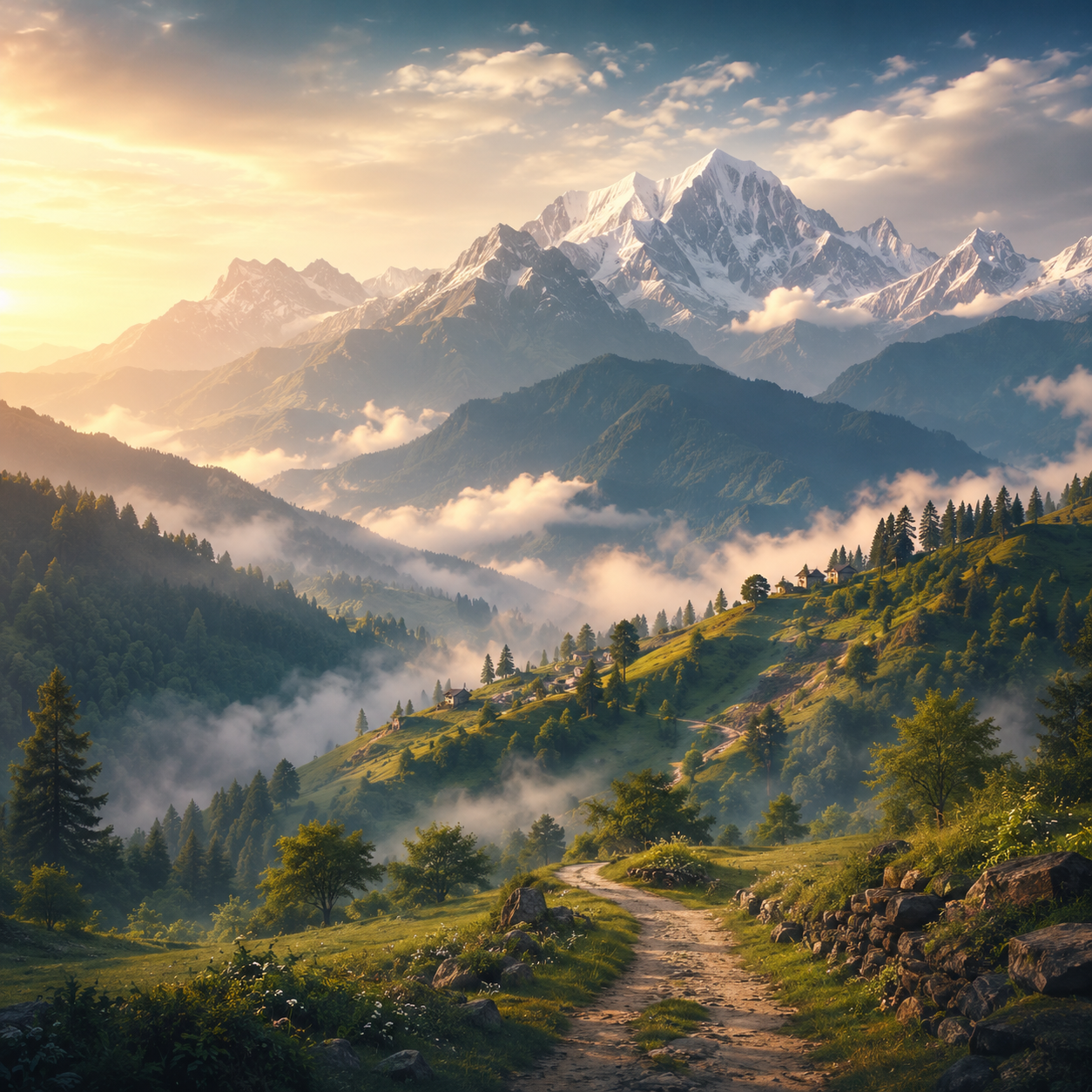
The piece has several Pahadi qualities:
- Simple, flowing melody: The tune moves naturally and sounds easy to hum, like a traditional mountain folk song.
- Peaceful hill atmosphere: The melody creates images of open valleys, cool air, winding paths and distant mountains.
- Gentle emotional feeling: Pahadi music often carries sweetness, longing, romance and quiet nostalgia rather than heavy classical seriousness.
- Repeated melodic phrases: Short phrases return like an echo across the hills, giving the composition a familiar folk character.
- Moderate, relaxed pace: This recording is approximately 92 BPM, allowing the melody to breathe without feeling slow or sleepy.
- Light-classical freedom: It sounds more like a dhun, meaning a freely composed melodic piece, rather than a strict performance following every formal rule of a raga.
So, “Pahadi Dhun” means a melody of the hills—soft, scenic, emotional and naturally flowing. The mountain image also matches the music because both create the same peaceful Himalayan feeling.
Raag Pahadi is a light, folk-inspired raga associated with the musical atmosphere of the hills and mountains of northern India. The word “Pahadi” means “of the mountains” or “from the hills.”
It is known for sounding sweet, natural, romantic and easy to remember. It can express peaceful happiness, love, separation, nostalgia and the feeling of travelling through open mountain landscapes.
Musical character
Raag Pahadi is not usually treated as a very strict, heavy classical raga. It is often used freely in:
- folk songs
- ghazals
- film music
- bhajans
- instrumental melodies
- romantic and travel songs
Its phrases often resemble North Indian hill folk music. The melody may sound simple, but a good performer adds delicate turns, slides and emotional pauses.
Notes used
Pahadi is commonly based around notes similar to:
Sa Re Ga Pa Dha Sa
However, performances often use additional notes, including both natural and flattened forms, depending on the composition. Because of this flexibility, different musicians may present Pahadi slightly differently.
A commonly heard simplified movement is:
Ascending: Sa Re Ga Pa Dha Sa
Descending: Sa Ni Dha Pa Ga Re Sa
This is only a basic guide. The real identity of the raga comes from its melodic phrases and feeling, not merely from a fixed scale.
Typical mood
Raag Pahadi often creates the feeling of:
- cool mountain air
- distant valleys
- a shepherd’s call
- gentle romance
- memories of home
- quiet loneliness
- freedom and open space
It can sound cheerful in one composition and deeply nostalgic in another.
Difference between Raag Pahadi and a Pahadi Dhun
A Raag Pahadi performance follows recognisable melodic characteristics of Pahadi.
A Pahadi Dhun is usually freer. It may borrow the flavour of Raag Pahadi and mountain folk music without following strict classical rules throughout.
That is why many film songs and instrumentals are described as being “based on Pahadi” rather than being pure classical presentations of the raga.